What It Is
- Room-level sensing you can install without rewiring
- A bridge from lighting data into building operations
- Sensing, HVAC, energy and supervisory control on one platform
- A retrofit route to building visibility

Connect lighting, occupancy, IAQ, HVAC and energy data in one platform—then turn those signals into coordinated room-level control, dashboards and building-wide supervision, with or without an existing BMS.
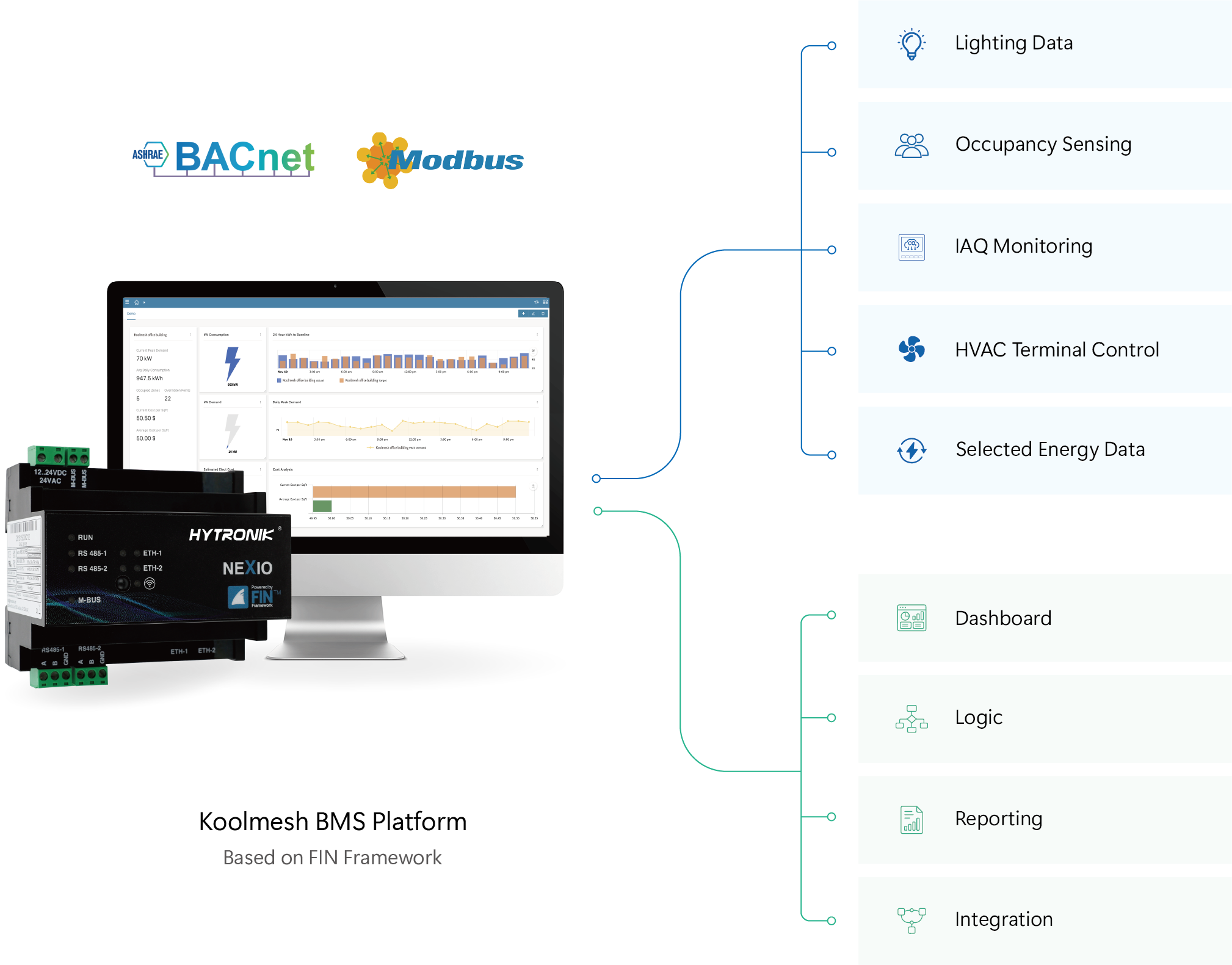
Koolmesh BMS is a room-level building intelligence and integration platform. It brings lighting, occupancy, indoor air quality, energy and HVAC data into one operational environment—either as a standalone supervisory solution or as an extension to an existing BMS.
Across Europe and the UK, regulations and performance frameworks are increasing expectations for energy monitoring, building automation, indoor environmental quality and transparent operational data. Koolmesh BMS brings lighting, occupancy, IAQ, energy and HVAC information into one platform, helping projects support EPBD and UK building-performance objectives while providing useful data for BREEAM, WELL and LEED strategies.


Koolmesh provides enabling technology and project data. Compliance and certification outcomes depend on project scope, system design, commissioning and third-party assessment.
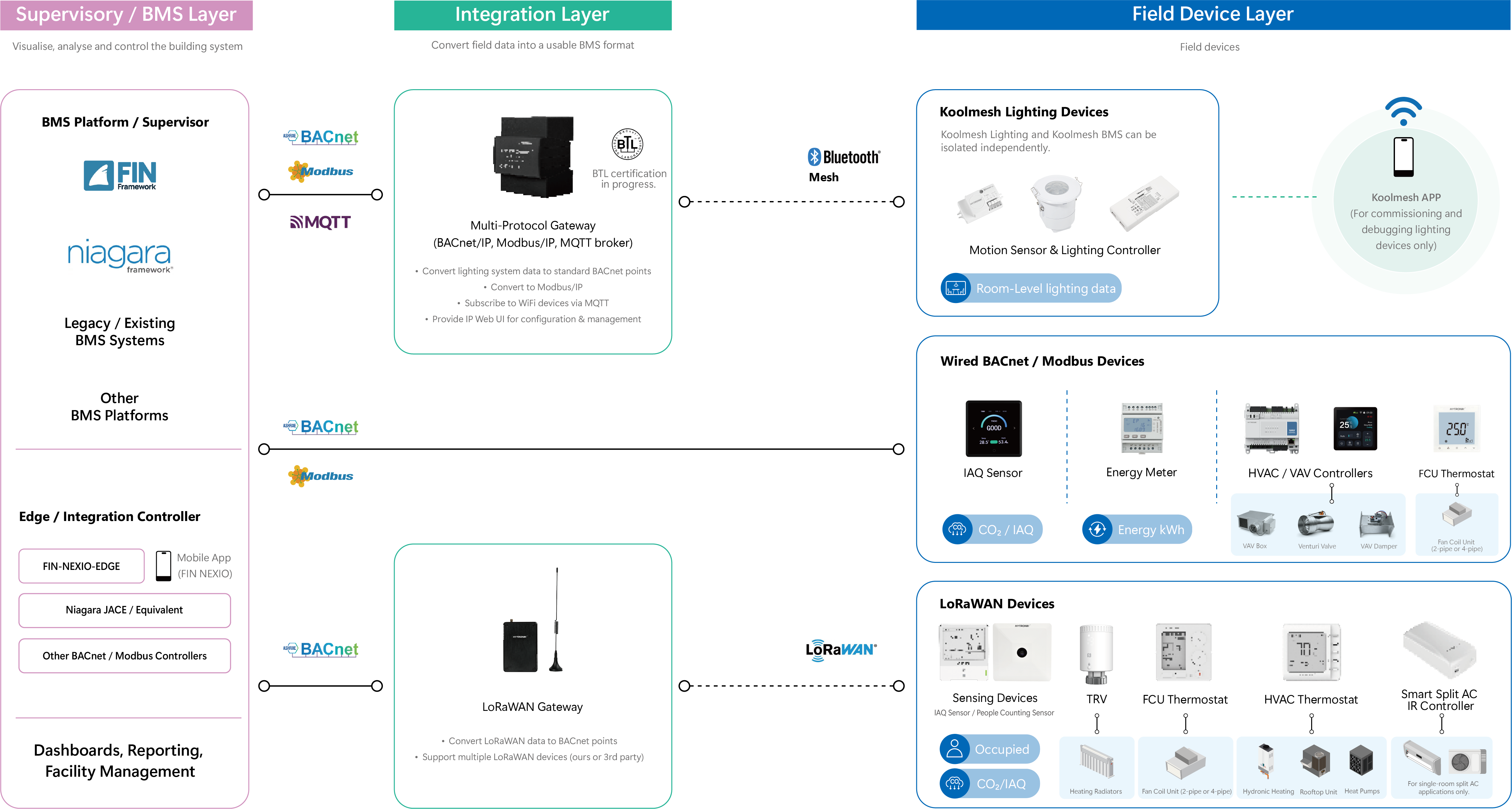
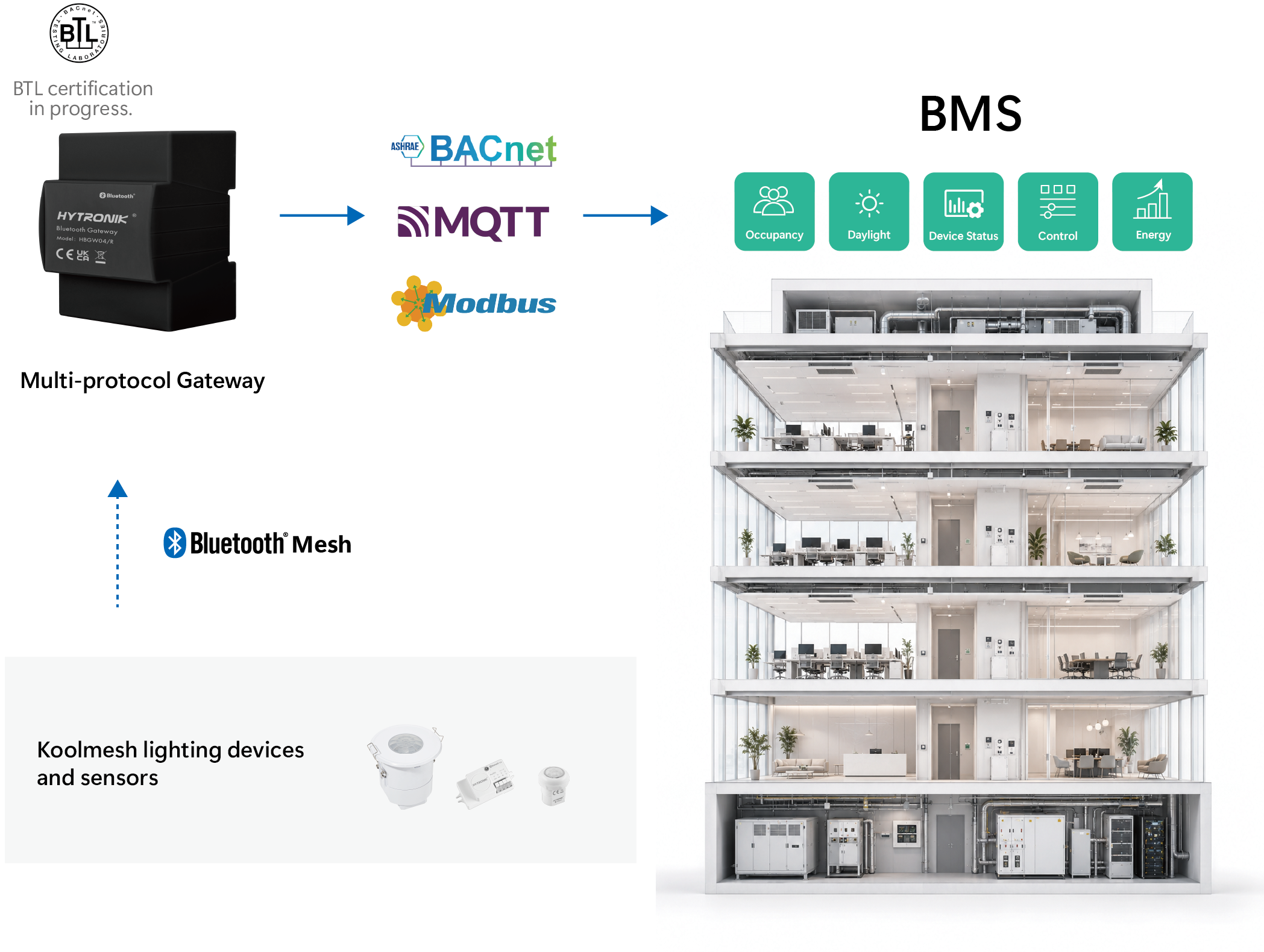
Koolmesh is not a replacement for your BMS. It is the wireless layer underneath it: room-level sensing that is fast to deploy, and open integration that feeds whatever supervisory platform you already run.
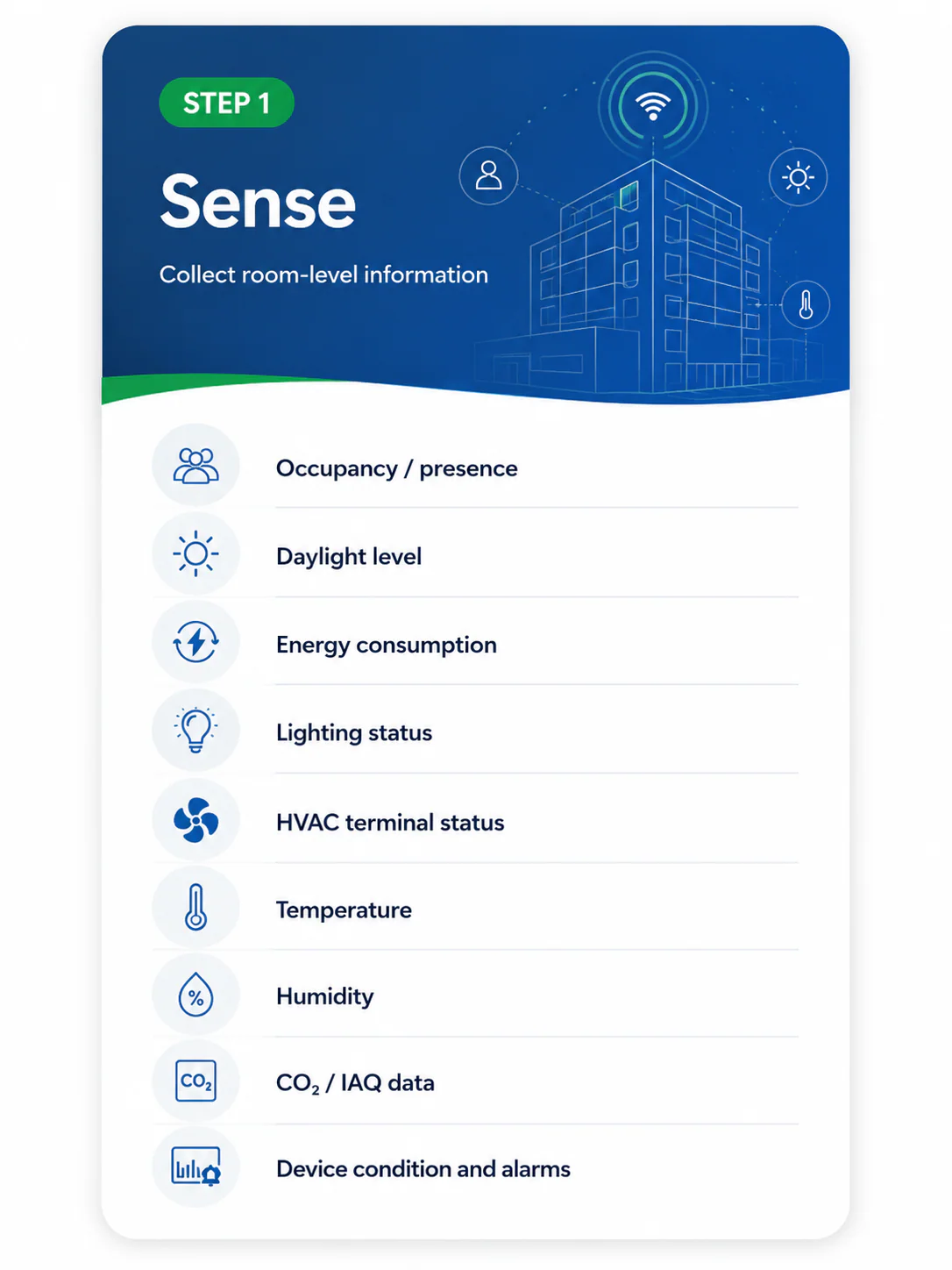
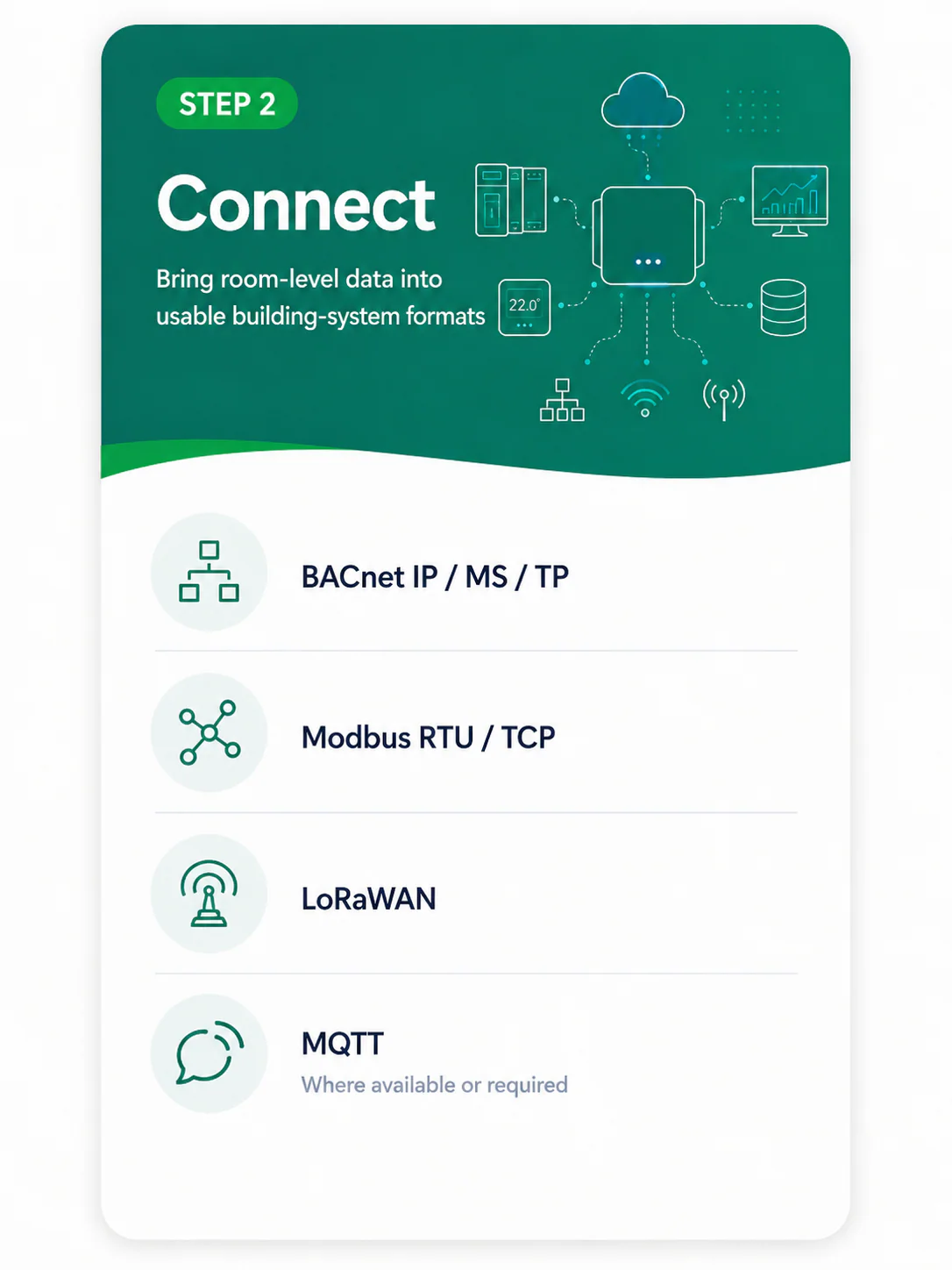
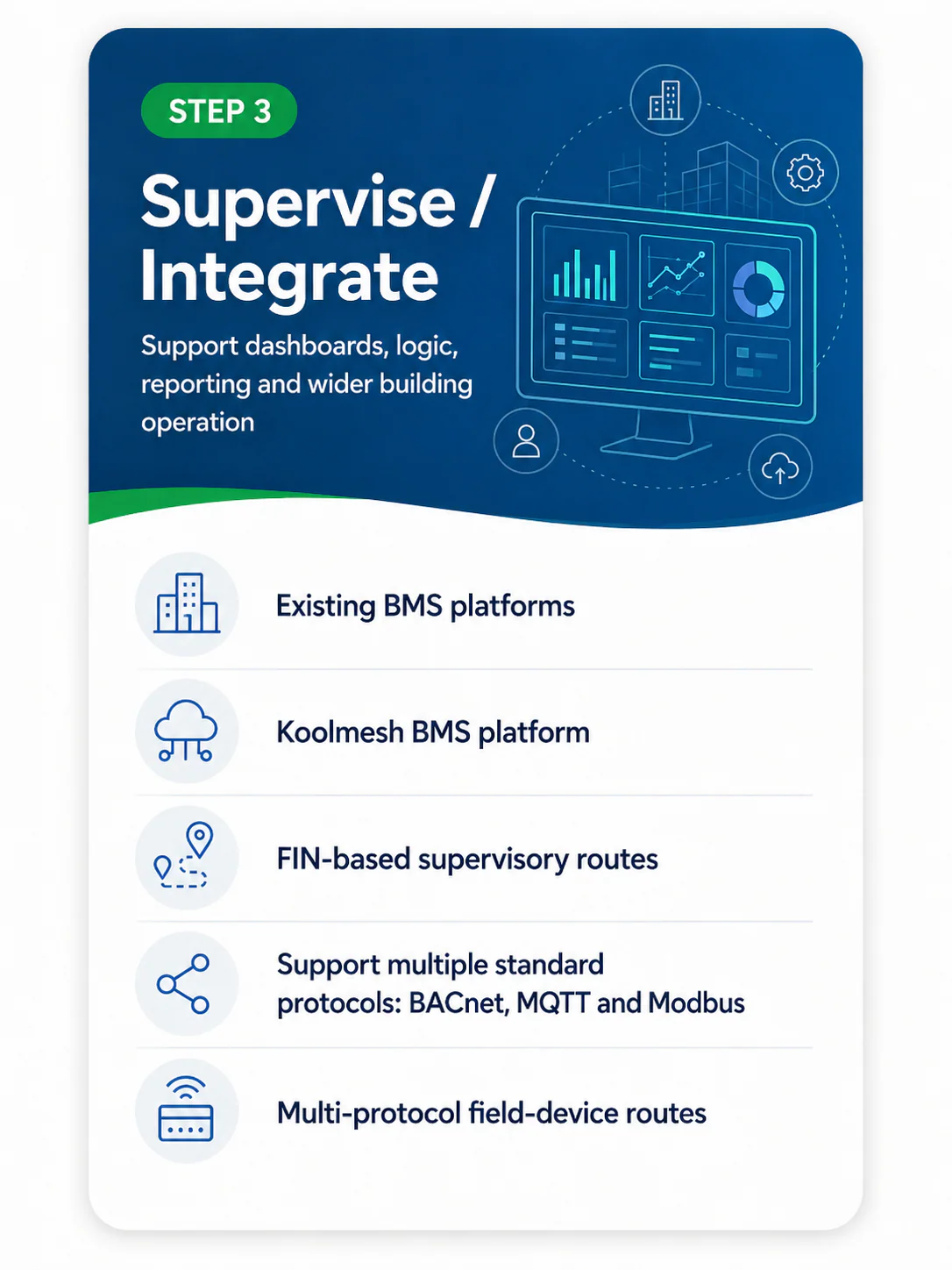
The building layer runs on FIN Framework, the supervisory platform from J2 Innovations. You get building-wide dashboards, Haystack semantic tagging and BACnet, Modbus and MQTT integration, on a platform your integrator most likely already knows.
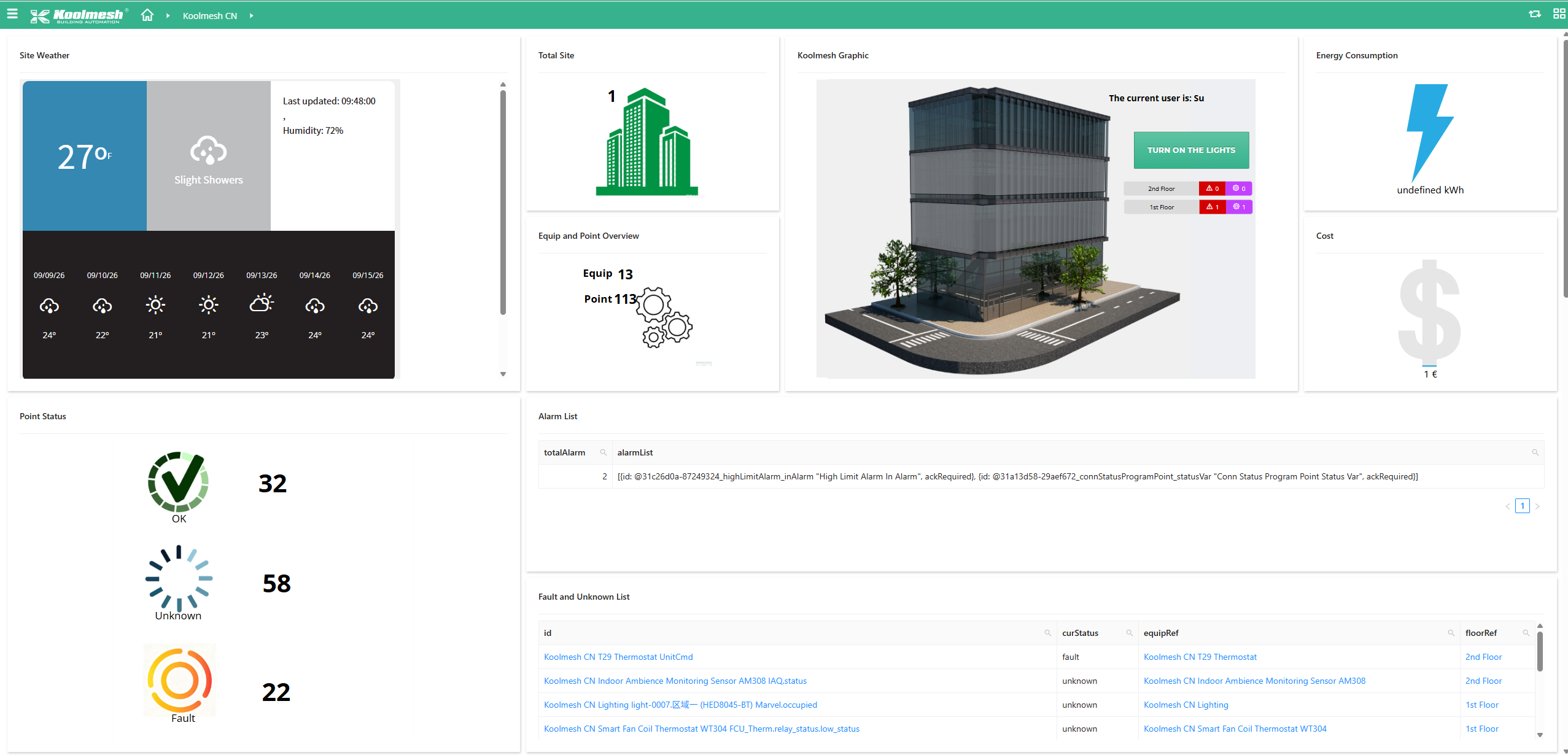
Pick the route that matches what is already installed in your building.
Path 1
You already have Koolmesh lighting, or it is in the design. We route occupancy, daylight and device data from that network up into your existing BMS or Koolmesh BMS.
Path 2
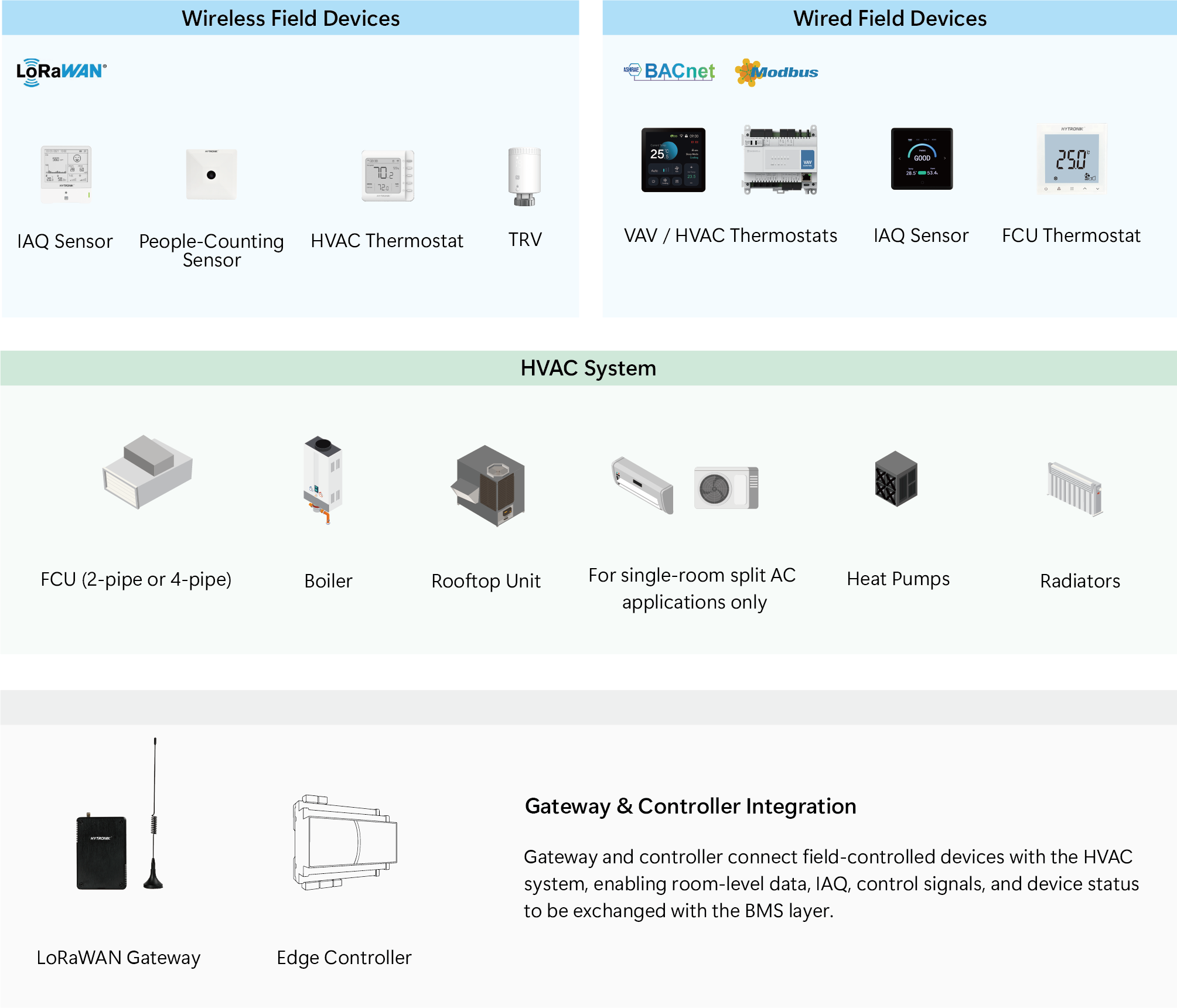
For occupied buildings: add wireless room sensing and field-level HVAC control without opening ceilings or pulling new cable.
Path 3
You need dashboards, alarms, reporting and several protocols talking to each other. We supply the supervisory layer and connect what is already installed.
You already have Koolmesh lighting, or it is in the design. We route occupancy, daylight and device data from that network up into your existing BMS or Koolmesh BMS.
For occupied buildings: add wireless room sensing and field-level HVAC control without opening ceilings or pulling new cable.
You need dashboards, alarms, reporting and several protocols talking to each other. We supply the supervisory layer and connect what is already installed.
REAL-WORLD PILOTS
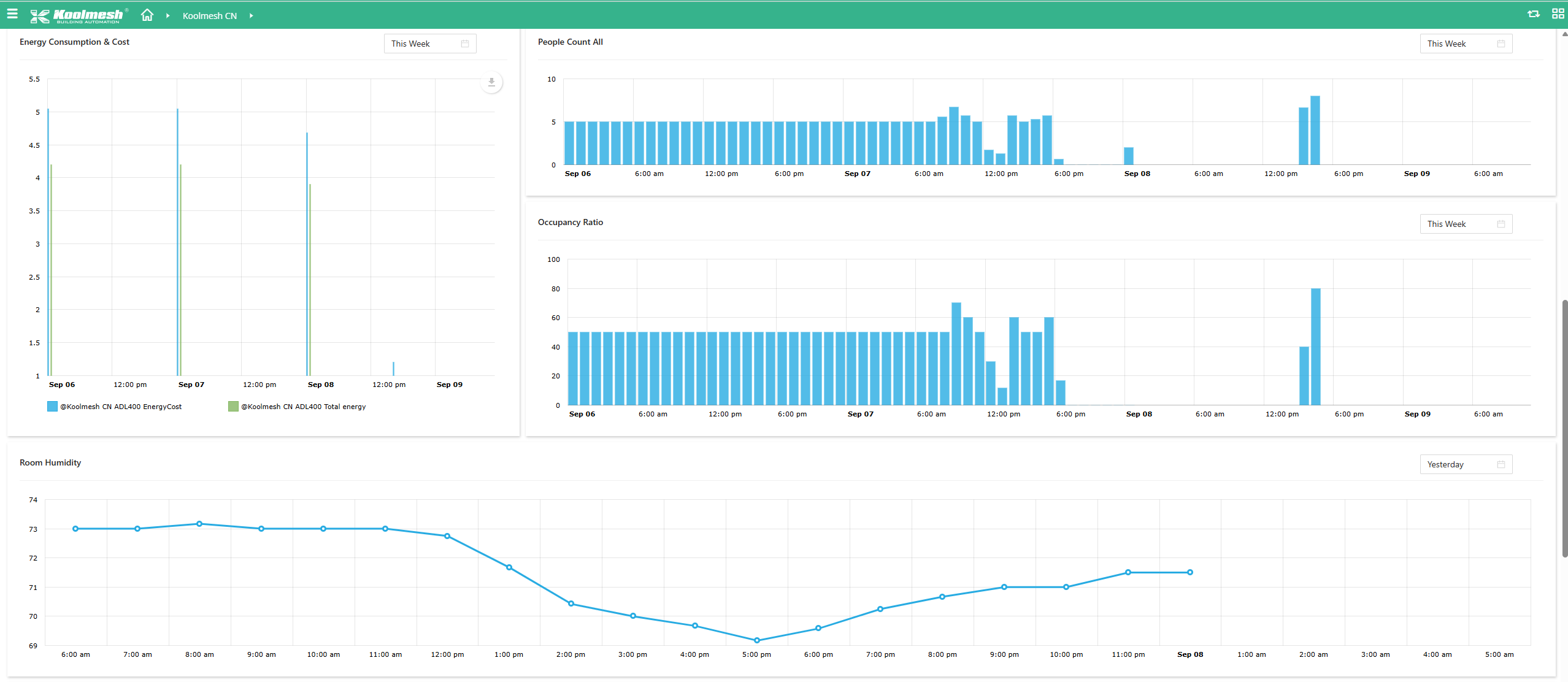
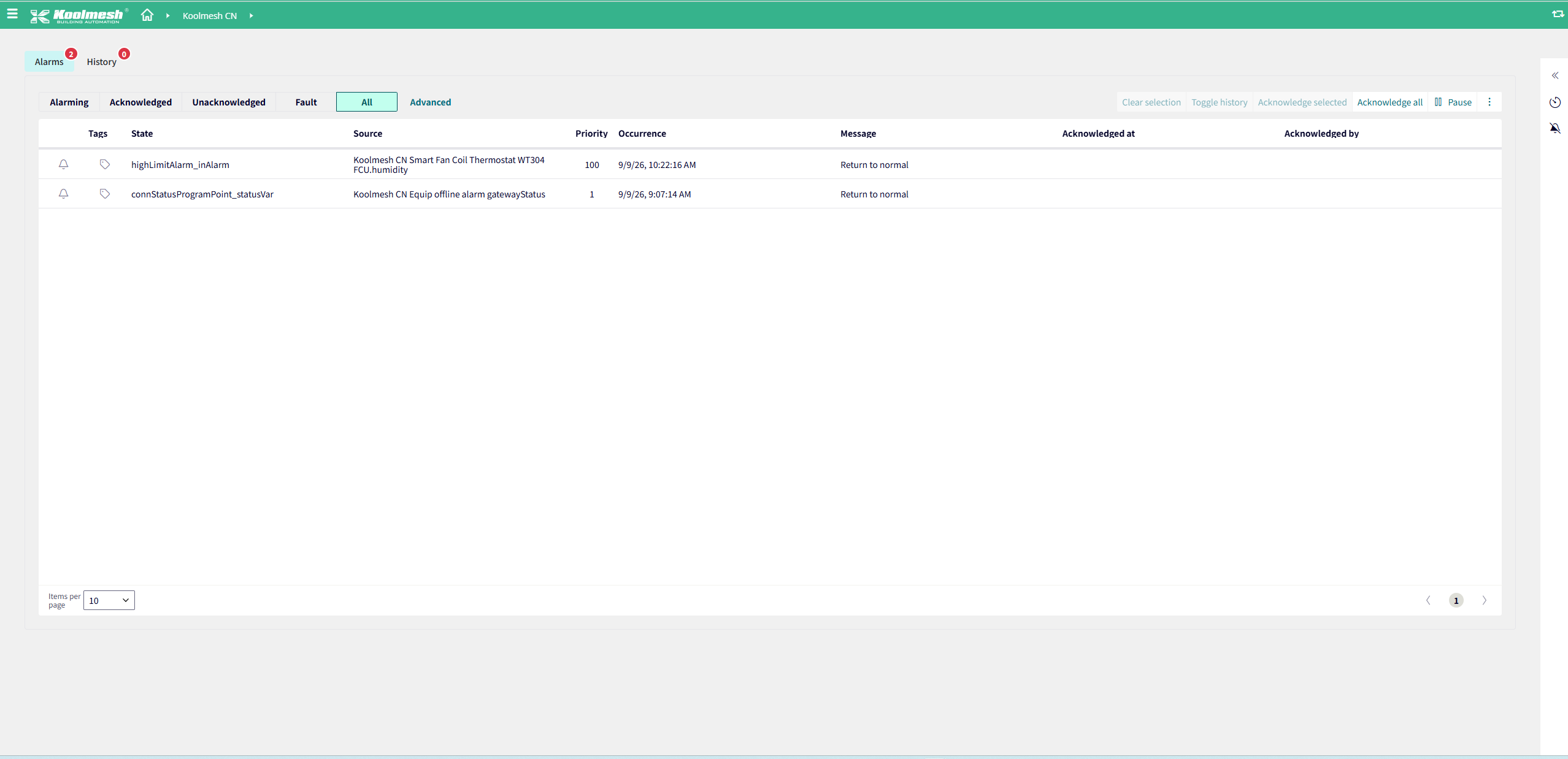
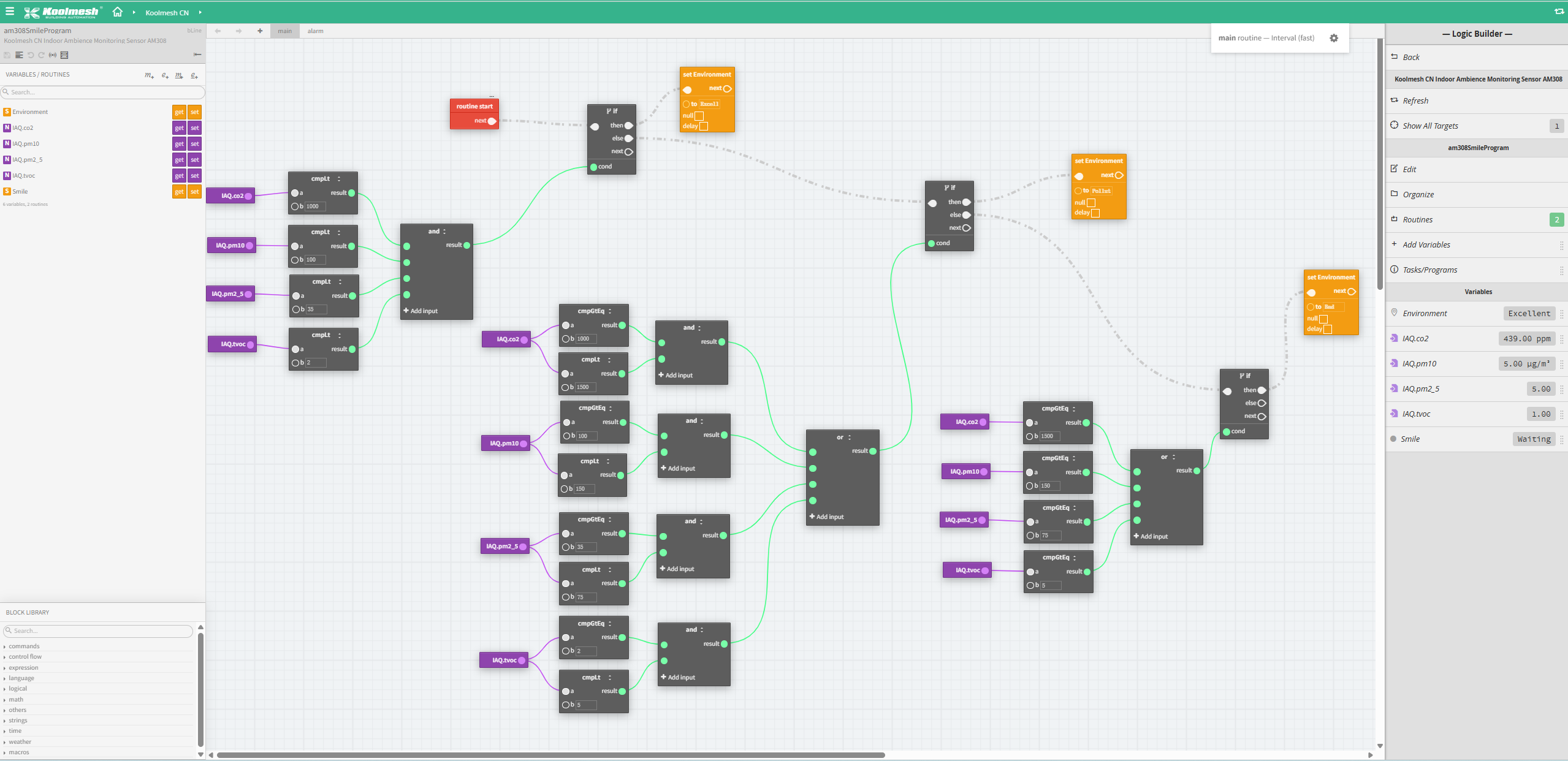
Two internal office pilots are bringing room-level environmental, occupancy and HVAC devices into the customised Koolmesh FIN supervisory platform.
IAQ and people-counting sensors provide environmental and occupancy data for ventilation and cooling logic. Smart radiator thermostats and FCU thermostats support temperature-based heating, cooling and fan-speed control through the customised FIN platform.
Scheduled to go live in mid-September 2026
IAQ and people-counting sensors provide environmental and occupancy data for ventilation and cooling logic. Smart radiator thermostats and FCU thermostats support temperature-based heating, cooling and fan-speed control through the customised FIN platform.
Scheduled to go live in mid-September 2026
Project Consultation
Send us the systems you run and what you want to see. We will tell you which of the three routes fits and what it would take.